


The Open Dialogue experts discussed the formula for success in the economy of the future at the National Centre RUSSIA
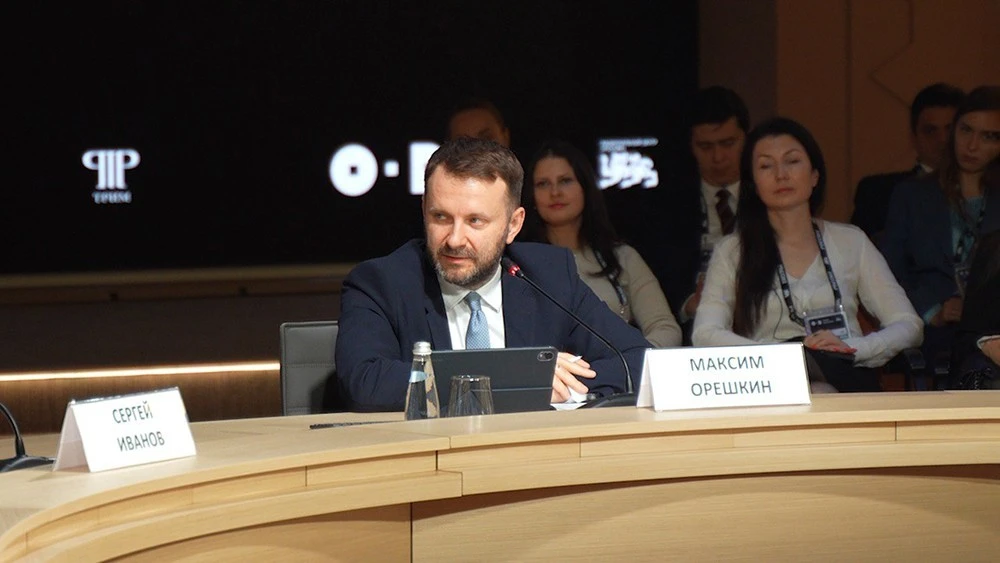
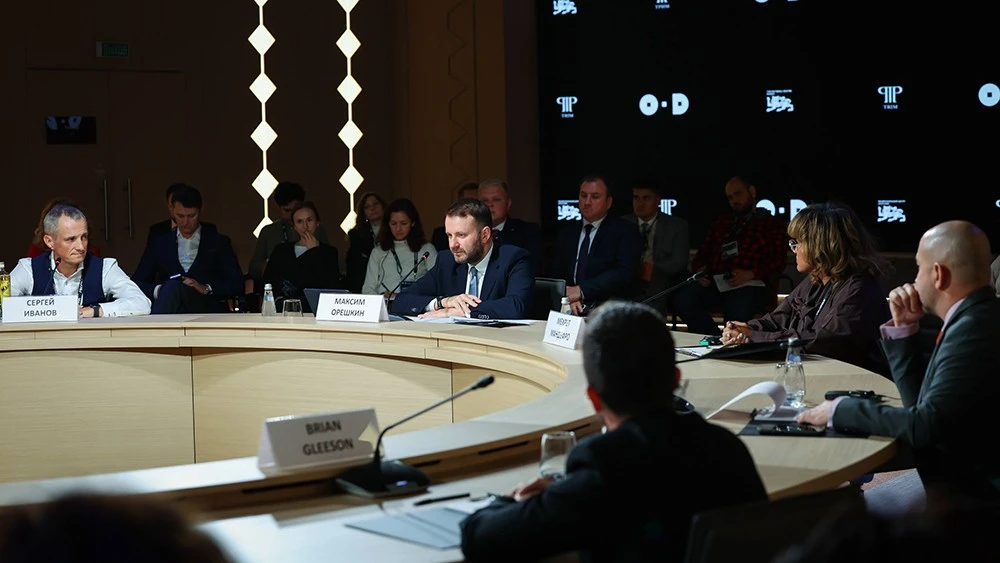
An expert session of the Open Dialogue titled: "The Future of the World. A New Platform for Global Growth" was held on 7 October at the National Centre RUSSIA. The discussion on the topic "The New Economy: Competition for Positive Development" was attended by world-class experts.
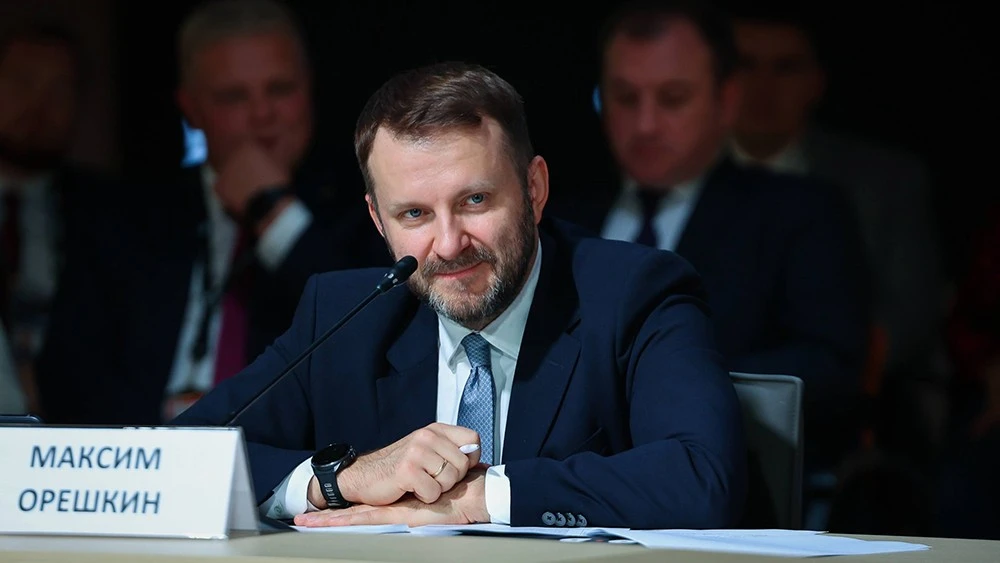
The panelists were greeted by Maxim Oreshkin, Moderator, Deputy Head of the Presidential Administration of the Russian Federation, Deputy Chairman of the Organizing Committee of the National Centre RUSSIA.
"Today, the global economy is undergoing a revolution of global enterprises: the influence of the countries of the World's majority is increasing in the markets, and it is their companies, products and cultural codes that are becoming a source of new ideas and emotions", said Maxim Oreshkin, Deputy Head of the Presidential Administration of the Russian Federation, Deputy Chairman of the National Centre RUSSIA Organizing Committee.
He noted that the success of the new generation of brands is related not to repeating patterns, but to creating unique experiences: "We see that interest in products and projects from the countries of the global majority has been growing. They are able to give the world new emotions, not repetitions. This is an obvious and growing trend."
The conversation here is about a new stage of competition — a competition at the level of impressions, where the winner is the one who offers not just a product or service, but a whole system of meanings and sensations.
"This is not a line of standard cliches, but a large matrix with a variety of services on one side, and a variety of products on the other. Each cell of this matrix is a unique product, a unique impression that did not exist before," Maxim Oreshkin emphasized.
The experts discussed values and meanings as a factor of competitiveness. Using food production as an example, Sergei Ivanov, Executive director and member of the Board of Directors of "EFKO" Group of companies, spoke about how, due to the presence of additional meanings, a commodity can become not just a product, but also a way of life, a source of impressions.
"Branding is the economy of impressions. Only there, impressions are tied to the product and add emotional benefits to its rational benefits," explained Sergei Ivanov.
According to him, the future of the primary sector lies in the transition from price competition to competition for trust, emotions and cultural significance of the product. The speaker also stressed the importance of the ethical moment in the economy of impressions.
"At some stage in the development of the impression economy, it was tempting to separate emotional benefits from rational ones, to turn them from related properties into a separate product. A modern corporation, in its relationship with its consumers, most resembles a big guy who seriously went out to fight with a kindergarten child. That is because modern marketing can impose and sell virtually anything. Today's impression economy is not just a market for emotions. This is a laboratory where a person is reassembled. If there is no agreement on rules and ethics, then the impression economy is highly likely to destroy society from within," Sergei Ivanov noted.
Developing the topic, James Law, founder of James Law Cybertecture International (China), explained how design, public spaces and aesthetics create economic and social value, and how, in the field of architecture and urbanism, the intensity of impressions and user experience are becoming new performance indicators.
"It is safe to say that in the new economy, impression-based cities act as catalysts for well-being, competitiveness and positive development," James Law emphasized.
Dmitry Vasilyev, Development Director and co-founder of "Karfidov Lab", touched upon the topic of the value of creativity in industry. He stated that in the new economy, those companies which integrate creativity into the value chain, from the idea to the end user, benefit.
"Creativity is becoming a real driver of industrial development: innovative design and non-standard engineering solutions enhance the competitiveness of industries. Therefore, modern industry must create not only functional products, but also impressions that generate trust and demand. Successful projects are born at the junction of engineering competencies and a creative approach — in the synergy of science, technology and creativity," Dmitry Vasilyev is convinced.
Nitaya Kanokmongkol, Executive Director of the Office of National Museums of Thailand, said that impressions increase the demand for art, forming an "economy of beauty."
"Beauty is becoming a real economic value. Aesthetic experiences in museums and art galleries stimulate cultural tourism, education, and creative industries. We try to balance identity and globalization, preserving the authenticity of Thai culture and making national art attractive to an international audience, because a new experience in managing content and meanings can be formed even without the use of technology," Nitaya Kanokmongkol said.
Brian Gleeson, General Manager of the Radisson Collection Paradise Resort & Spa (Ireland), kept on exploring the topic of the "capital of impressions" in the field of tourism and hospitality. He stated that the introduction of local culture and responsible practices could not only increase brand value, but also stimulate the development of other industries, and that he could help unlock the unused potential of international tourism that Russia possesses.
"The focus on tourism has led to Ireland becoming one of the largest technology hubs in the world. We have prioritized the development of our country's brand, because it illustrates what we are. I wanted to do the same thing in Russia. People from abroad should understand how welcoming the people here are, and how incredible the quality of service provided by everything related to the experience industry is. Ireland, which has five million inhabitants, receives about 6 billion euros from international tourism. But our country will never compare with Russia. The marketing potential of your country is huge. Here you can use the features of geography, UNESCO sites, cultural traditions, history, and much more," concluded Brian Gleeson.
Felipe Buitrago, Deputy Minister of Orange (Creative) Economy (Colombia), explained how cultural and semantic narratives shape the competitiveness of countries and their "soft power." He noted that the impression economy and the "orange economy" should become strategic assets of states.
"The state should not only subsidize culture, but also form an infrastructure of meanings, financing solutions and innovations. At the same time, we must not forget about maintaining a balance between international competitiveness and the preservation of unique local cultural codes in the new economy," said Felipe Buitrago.
Producer, screenwriter and director Mehret Mandefro from Ethiopia touched upon the topic of the local languages and culture as an alternative to existing cliches.
"In the new economy, local cultures and storytelling traditions can compete with the dominant Hollywood formats due to their authenticity. In addition, local identity and cultural uniqueness act as competitive advantages in the positioning of projects on global platforms such as Netflix and Disney+, which contributes to the formation of large-scale content ecosystems, which can be effective solutions for new economies," concluded Mehret Mandefro.
In addition, she stressed that there is a global shift in the world of cinematography. The stories that repeat themselves have been devalued and are of no interest to anyone. The future belongs to authentic stories.
"Stories that have already been around are no longer in demand — they are often called plastic stories. We are currently experiencing such a shift, a revolutionary change. New creative forms are emerging that use a local language, which is a whole cosmos. I think there's really a lot of potential there, we can open up a whole new world in storytelling," Mehret Mandefro said.
A recording of the broadcast of the expert session "The New Economy: Competition for Positive Development" by the Open Dialogue is available on the website Russia.ru and in the official social networks of the National Centre RUSSIA.