


Participants of the Symposium "Inventing the Future" discussed what the day of the Man of the Future will look like
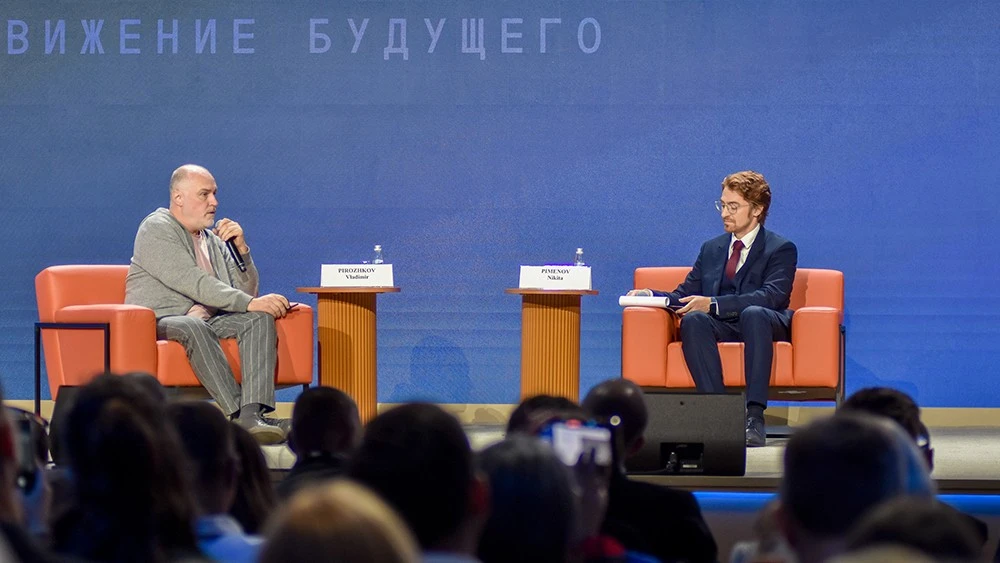
On the first day of the II International Symposium "Inventing the Future", which is taking place at the National Centre RUSSIA on 7 – 8 October, an open lecture hall started. During the event, well-known Russian and foreign experts presented their views on one day of the man of the future.
Maxim Oreshkin, Deputy Head of the Presidential Administration of the Russian Federation, opened the lecture hall. On the first day of the event, participants discussed key areas of future development, covering housing technologies, transport and mobility, leisure and entertainment activities, the media industry and content, fashion and style trends, the evolution of language and communication, and scientific research in the field of space.
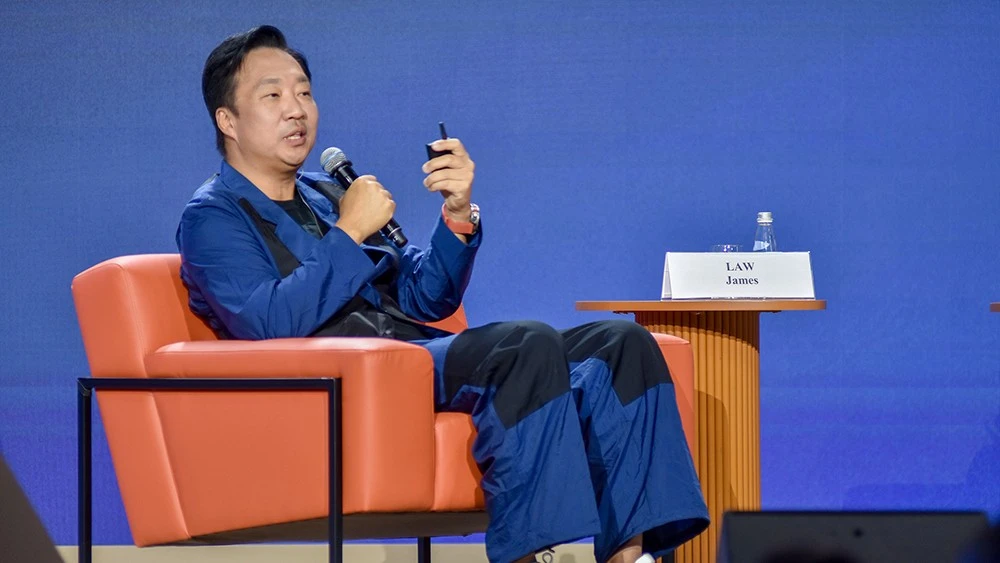
James Law, architect, founder and CEO of James Law Cybertecture (China) introduced the guests to the houses of the future. According to him, people will live not just in buildings, but in a changing living space, in which environmental factors, health and the emotional state of a person will play a special role.
"The house of the future is not just a place of residence, but a sacred space with a soul, based on artificial intelligence. AI will take care of the residents, help them to be healthy and happy. It is an ecologically clean environment where natural elements prevail, there is no pollution and stress, and technology allows one to live freely and be mobile, with no dependence on cars and city roads. Such a house will become both a personal space for the family and a centre of creativity, reminding of our humanity and maintaining harmony with nature," said James Law.
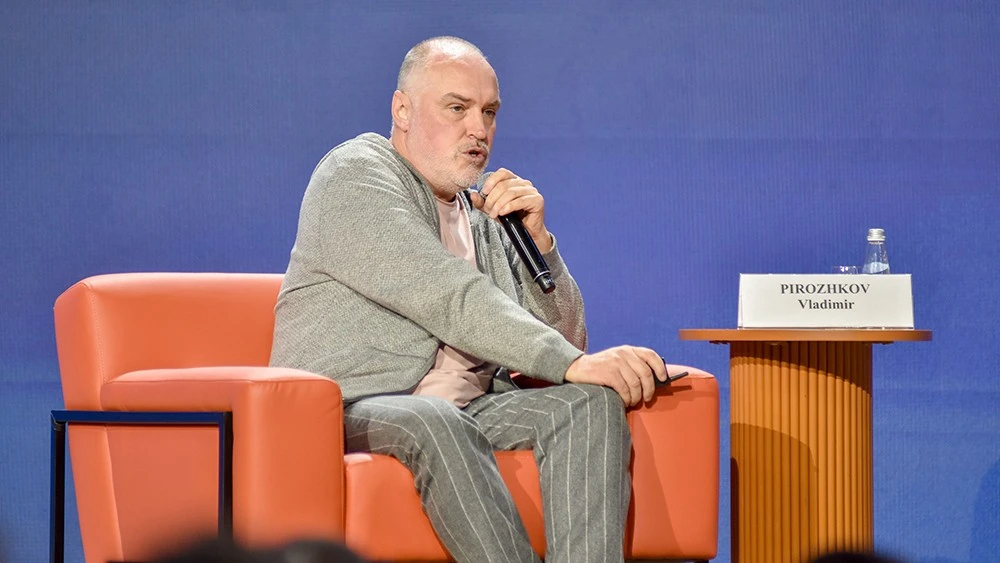
The concept of the movement of the future was described by Vladimir Pirozhkov, industrial designer, futurist, director of the "Sber" Design Laboratory. He noted that in the future, transport will be integrated with digital technologies and will become environmentally sustainable, changing the urban environment and people's way of life.
"The transport of the future will anticipate the passenger's desires, monitor their health and create a comfortable atmosphere for work and leisure. Digitalization of cities and smart technologies will transform transport systems, reduce traffic jams and reduce the burden on the environment. Unmanned aerial vehicles and smart grids will become the norm, making travel convenient, environmentally friendly and integrated into the overall digital space of the city. A significant number of people will move in space, having left the flat area," Vladimir Pirozhkov emphasized.
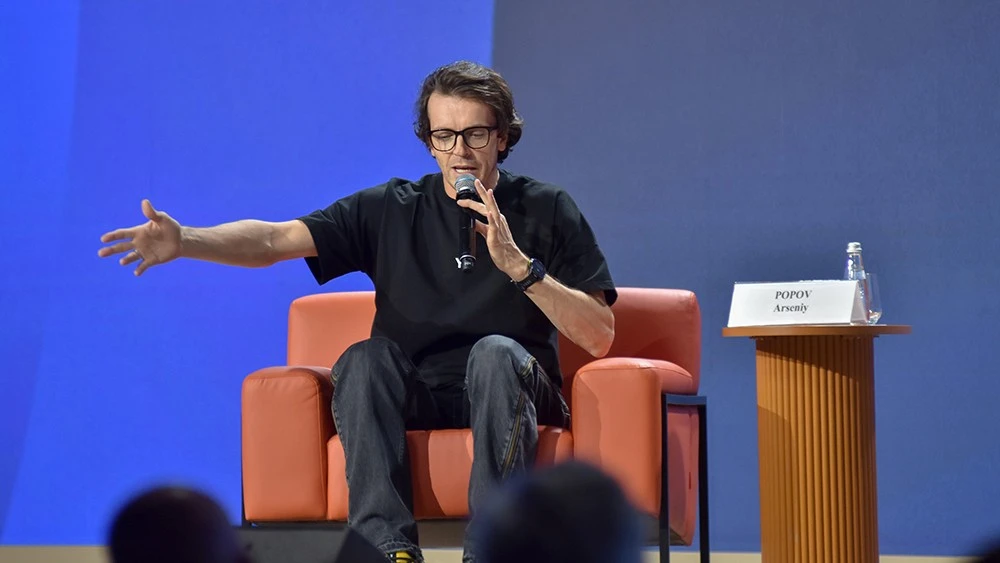
Arseniy Popov, theatre and film actor, TV presenter, and improviser, spoke about how a person's leisure time may change in the future. He noted that recreation and entertainment will be closely linked to digital technologies such as virtual reality, artificial intelligence and holograms.
"Technological evolution will lead to the fact that personal space and recreation will be fully integrated with digital systems, creating individual virtual worlds that are customized according to one's desires and needs. Virtual reality, artificial intelligence and holographic technologies will replace real travelling and mass events, which will increase the level of comfort, safety and personalization of leisure time. At the same time, the importance of live communication and emotional interactions will remain," concluded Arseniy Popov.
The image of media in the future was described by Wang Chao, co-founder of SCIFI Fanspace and creative director of Chengdu Future Light Culture Co., Ltd (China). He drew the attention to the fact that media and content will be based on digital technologies and artificial intelligence.
"Modern technologies and artificial intelligence are radically transforming the media market. Content is becoming more personalized, interactive, and efficient in terms of production. In the future, it will be consumed in new formats, such as short videos and interactive episodes, and the process of its creation will become accessible to everyone thanks to digital tools. This will allow us to focus on the innovative and creative component," said Wang Chao.
Igor Gulyaev, Russian designer, couturier, TV presenter, and founder of the IGOR GULYAEV fashion house, presented his vision of the fashion industry in the future. In his opinion, it will preserve eternal values — quality, manual labor, uniqueness — whilst actively using artificial intelligence and new materials.
"The high fashion of the future will keep its basic principles of impeccable quality, craftsmanship and uniqueness, while artificial intelligence will become a powerful assistant to designers, helping them to create personalized and functional collections. We must preserve and hand the experience of old-school craftsmen over to a new generation, integrating innovations with manual labor, so that the Russian fashion industry will confidently take its rightful place in the global market," said designer Igor Gulyaev.
The transformation of language in the future was the topic of a speech by Rodrigo Andres Quevedo Silva, Chairman of the Chilean Robotics Association. According to him, the communication of the future will be closely linked to neural interfaces, which are being developed for instant understanding, processing and transmission of information.
"The language of the future is communication based on neural interfaces and artificial intelligence, which will provide instant transmission of information and emotions, as well as the ability to distinguish truth from lies. These technologies will radically transform the interaction between humans and animals, expand the possibilities of communication, and create conditions for the appearance of people with superpowers, making technical means an extension of man and enhancing their capabilities," said Rodrigo Andres Quevedo Silva.
Vladimir Surdin, astronomer, Candidate of Physico-Mathematical Sciences, Associate Professor at Lomonosov Moscow State University, senior researcher at Sternberg State Astronomical Institute of the MSU, talked about how science and the role of space will change in the future. From his point of view, the future of space exploration is connected with the exploration of the Moon, Mars and the satellites of the giant planets.
"Science opens up new horizons for space exploration, from resource extraction on the Moon and Mars to the search for extraterrestrial life on the satellites of giant planets. In the coming decades, the development of technology will make space travel more accessible and efficient. At the same time, special attention is being paid to creating safe living conditions in the extreme space environment and developing the infrastructure of lunar and Martian bases, which lays the foundation for long-term colonization and scientific discoveries," concluded Vladimir Surdin.
As part of the open lecture, visionaries, scientists, designers and representatives of the creative industries talk about what a house and a street, as well as transport and movement, food and leisure, style and self-realization of the future will be like, as well as what horizons dreams of space exploration open up. Presentations are accompanied by visualization of scenarios which speakers are describing in their speeches. In addition, the audience can vote for the most favorite future scenario.
The II International Symposium "Inventing the Future" is taking place on 7 – 8 October at the National Centre RUSSIA, and brings together participants from more than 85 countries of the world, and from all subjects of the Russian Federation. It is attended by more than 250 Russian and foreign experts from China, the USA, Italy, Latin America, Southeast Asia, the Middle East and Africa.
The International Symposium "Inventing the Future" is organized on behalf of Russian President Vladimir Putin under the auspices of the Decade of Science and Technology, with the support of the Ministry of Foreign Affairs, the Ministry of Science and Higher Education, and the Ministry of Culture of the Russian Federation. The analytical partner is the VTsIOM Analytical Centre. The literary partner is Eksmo-AST Publishing Group.