


How technology is changing art: Artists and scientists' perspective on the future
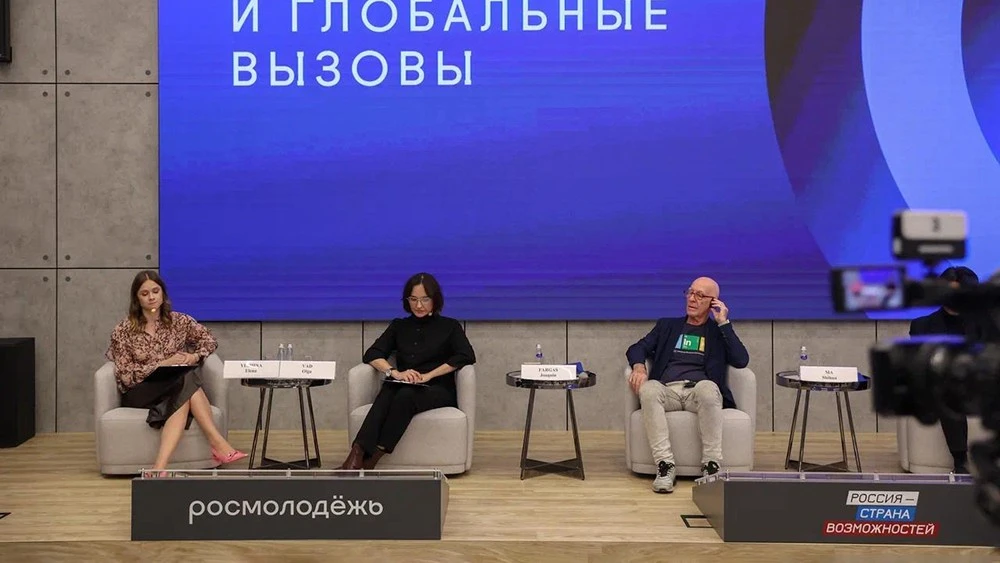
As part of the open programme of the II International Symposium "Inventing the Future", a panel discussion "Art and Global Challenges" was held, organized with the participation of ITMO. Artists from around the world shared their experience of combining art and technology. The Symposium "Inventing the Future" is the leading platform for the joint design of positive scenarios for the development of the future, and for these scenarios' visualization.
The moderators were Olga Vad, curator, creative producer, head of the Master's programme at ITMO University's Art & Science Centre, co-founder of the Agency for Cultural Projects NADO, and Yelena Yushina, art critic, curator, representative of the National Centre RUSSIA.
In particular, the issues of materiality and prospects for the preservation of art, the philosophy of technological renewal and the perception of generations of technical devices as an analogy of human generations, were considered.
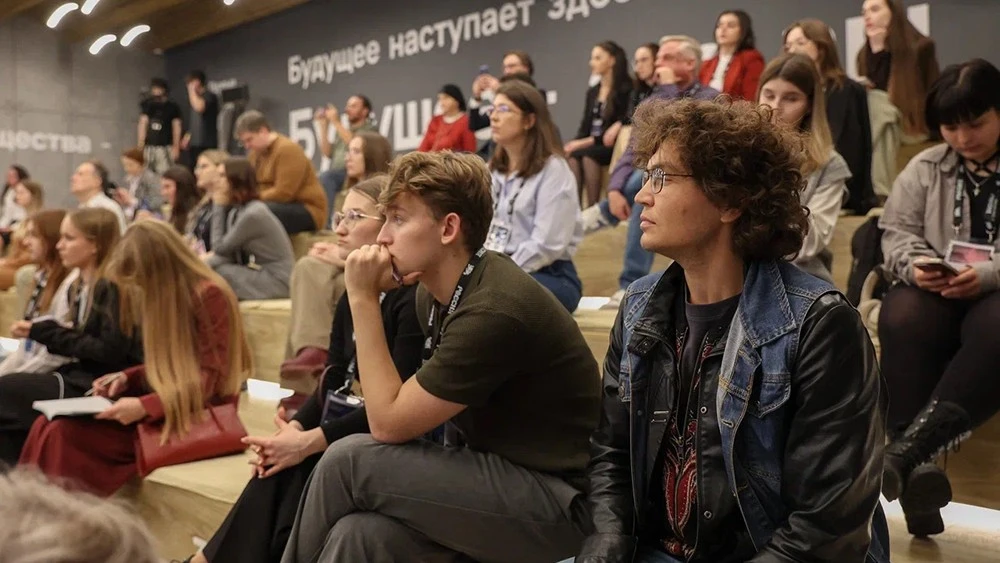
"Today, one of the main challenges for contemporary art is the preservation of technologically innovative works. We live in an era of rapid generational change of technical devices — phones, computers and other digital media. And this is not only a marketing issue, but also a reflection of deep cultural and philosophical processes. There is a theory according to which a person intentionally endows the devices with “mortality” by projecting their own fears onto it. Each new generation of devices is born and ages like a human. This changes our perception of materiality, innovation, and the very nature of art. The question arises: if devices and works of art acquire a limited life cycle, how can we build strategies for their preservation? And how significant is the material form of the piece of art today?", noted Yelena Yushina.
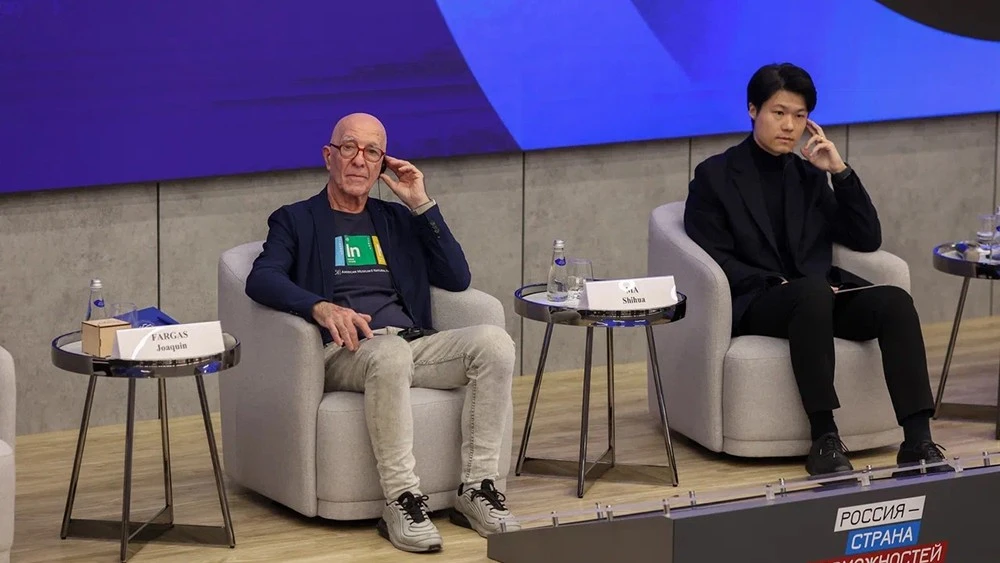
Joaquin Fargas, Argentine engineer, whose work is a fusion of fantasy, biological materials, robotics and AI technologies, spoke about how science, biotechnology, neural networks, quantum computing and art together can change human nature.
"Maybe we are also a human blockchain, and our cells are interconnected not only chemically, but also through some kind of quantum connection? We can imagine that digital technologies, like blockchain and decentralized data storage, can be used not only for cryptocurrencies, but also for understanding the human body itself," said Joaquin Fargas.
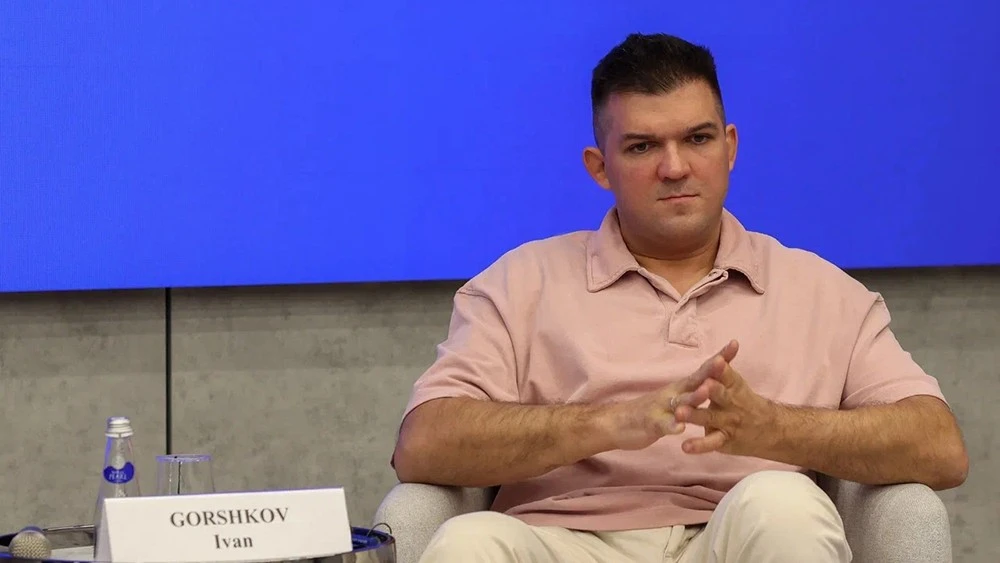
Ivan Gorshkov, contemporary Russian artist, winner of the Award "Innovation" and Cosmoscow's "Artist of the Year", also participated in the discussion. An author of the works which are currently on display at the Tretyakov Gallery, he spoke about the influence of modernity on his own art.
"The fantasies of my youth, the technological dreams that seemed impossible, are rapidly becoming reality today. It is my duty as an artist to realize this and find an adequate place for it in my practice. Today, technology gives the artist an opportunity to work with the impossible. And I think that our task is not only to use these tools, but also to create a new language in which the material and digital, the ephemeral and the eternal, the everyday and the mythological, coexist," Ivan Gorshkov emphasized.
The II International Symposium "Inventing the Future" is being held at the National Centre RUSSIA on 7 – 8 October. It brought together participants from 85 countries, as well as from all subjects of the Russian Federation. It is attended by more than 260 Russian and foreign experts from China, the USA, Italy, Latin America, Southeast Asia, the Middle East and Africa.
The International Symposium "Inventing the Future" was organized on behalf of Russian President Vladimir Putin under the auspices of the Decade of Science and Technology, with the support of the Ministry of Foreign Affairs, the Ministry of Science and Higher Education, and the Ministry of Culture of the Russian Federation. The analytical partner is the VTsIOM Analytical Centre. The literary partner is Eksmo-AST Publishing Group.