


The contribution of the national project "New Materials and Chemistry" to Russia’s technological leadership was highlighted at the Symposium
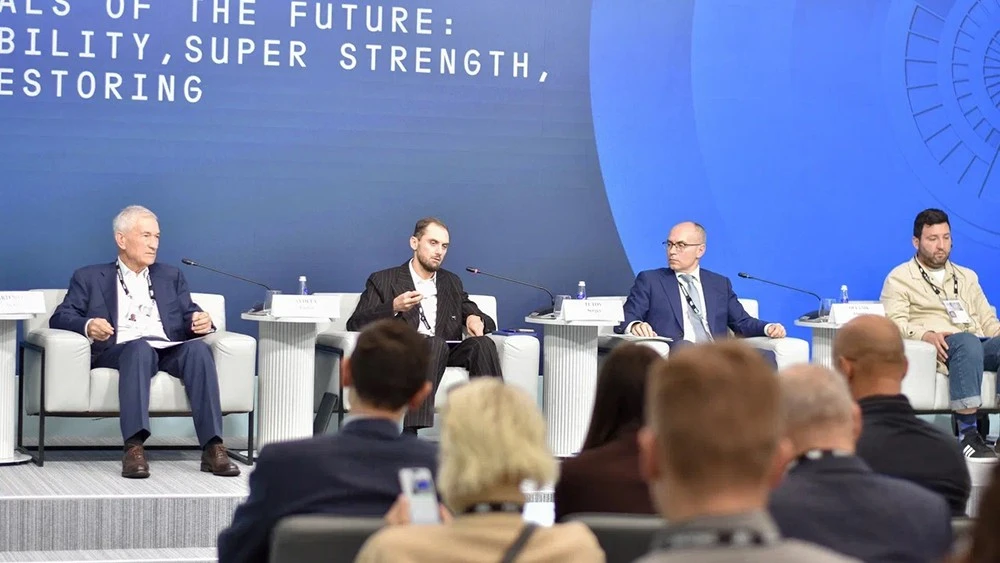
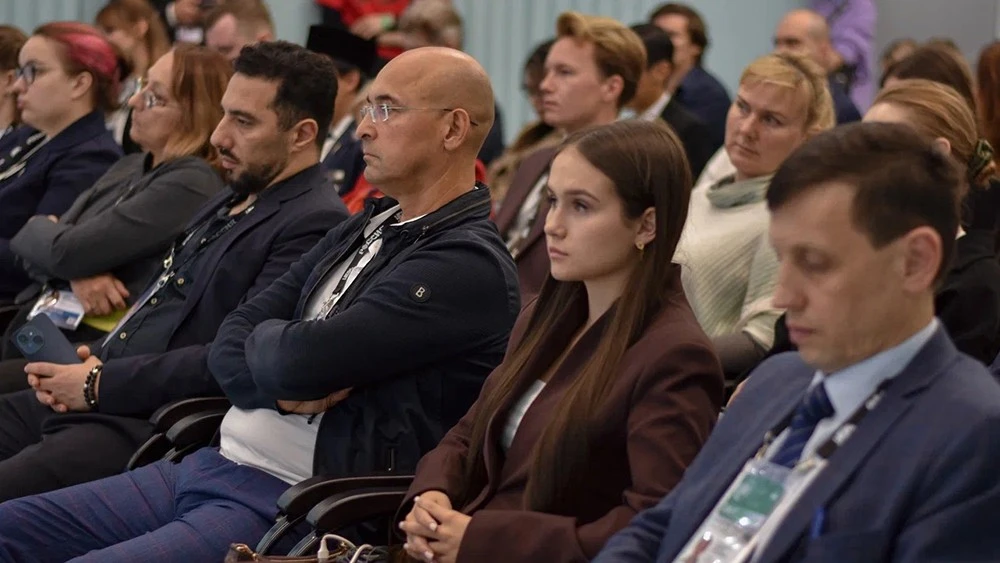
On the first day of the II International Symposium "Inventing the Future", a panel discussion titled "Materials of the Future: Invisibility, Ultra-High Strength, Self-Healing" was held at the National Centre RUSSIA. It took place as part of the "Technology" track and brought together leading scientists and engineers. Participants discussed the most significant scientific discoveries of recent years and their potential applications in industry and the economy. The event was co-organised by the Russian Academy of Sciences.
During the discussion, experts focused on how advanced scientific achievements can be transformed into competitive market products to help Russia achieve technological leadership. According to Stepan Kalmykov, Vice President of the Russian Academy of Sciences, this is one of the key ways to ensure the country’s technological sovereignty and strengthen its position in breakthrough technology sectors. One of the strategic initiatives supporting these goals is the national project "New Materials and Chemistry", presented by Alexei Artemyev, Deputy Director of the Department of Chemical Industry at the Russian Ministry of Industry and Trade.
He noted that although the project has been underway for less than a year, its first results are already visible. These include progress in developing materials for aviation and space engine manufacturing, as well as those suitable for Arctic conditions. Another focus area is the study of materials capable of interacting with various types of ionising radiation.
"Another very important area that is developing successfully today is the integration of artificial intelligence into technological processes for chemical product development. AI is also proving valuable in molecular design and in the search for materials with specific properties. Overall, I believe that in just a few years it will be impossible to imagine a laboratory where researchers do not use such tools," said Alexei Artemyev.
Albert Nasibulin, Doctor of Technical Sciences, Professor of the Russian Academy of Sciences, and Head of the Nanomaterials Laboratory at the Skolkovo Institute of Science and Technology (Skoltech), presented interim results and prospects for the development of carbon nanomaterials — including single-walled carbon nanotubes. These materials combine unique properties: they are excellent heat conductors, semiconductors, and chemically inert — capable of withstanding temperatures up to 1,500°C without losing internal structural integrity. According to the scientist, Russia already has a strong foundation in this area.
"To achieve technological leadership in this and other key fields, it is essential to combine four crucial factors. First, an effective ecosystem that allows scientific results to be implemented. Second, education — the development of academic schools and the training of qualified researchers. Third, the continuous advancement of science itself. And fourth, cooperation between scientists and business, ensuring the successful commercialisation of research results. Where these principles are followed, growth is inevitable," said Albert Nasibulin.
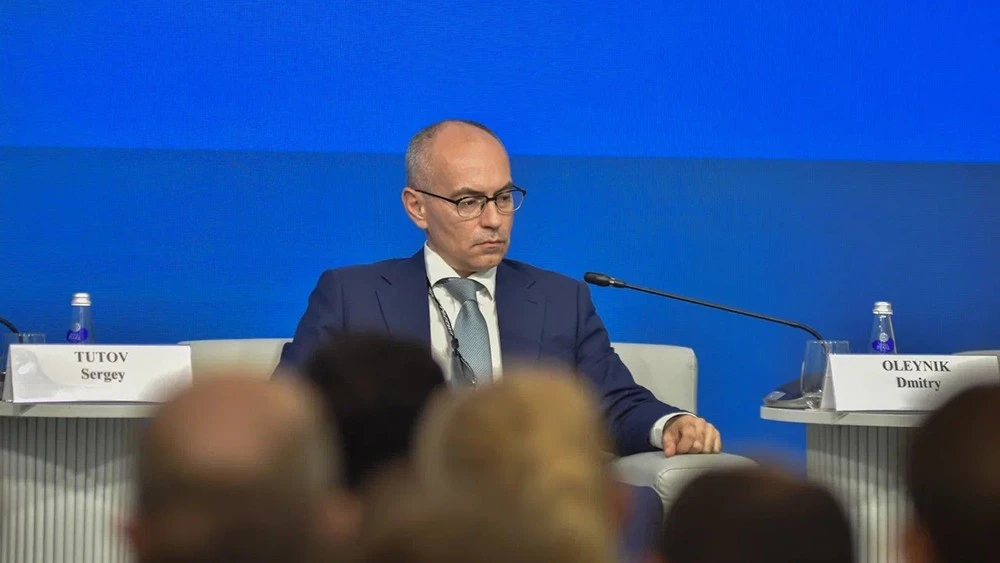
Dmitry Oleinik, Adviser to the Director General of Rosatom Nedra JSC, spoke about a promising area — the development of large-scale long-term deposits of technogenic waste to extract elements in demand by industry and improve environmental sustainability. He reminded the audience that there are no mineral resources in the Earth's crust that are useless to humanity, and therefore it is necessary to move from single-component mining of mineral resources to integrated extraction methods that make it possible to recover as many valuable elements as possible, including noble, rare, and rare-earth metals, as well as other scarce resources.
"Such technologies are already being developed by companies within Rosatom’s mining division. In particular, one of them makes it possible to extract scandium as a by-product during uranium leaching. Of course, these methods have their own challenges, but Rosatom, together with the Russian Academy of Sciences and Moscow State University, is ready and able to provide adequate solutions," noted Dmitry Oleinik.
International experience in the development of innovative materials was presented by Manuel Andres Lara Yanez, Coordinator of the Office for Innovation and Entrepreneurship at the Technological University of Chile, industrial designer, and Master of Design and Sustainable Innovation. He shared that his team focuses on researching and processing natural biological raw materials, particularly orange peels.
"It turned out that materials made from them have excellent soundproofing properties. Given that Chile is a country with a very high level of noise pollution, such materials are in great demand, including for metro construction. We are also studying the possibilities of recycling eggshells — this raw material has also shown strong potential not only for sound insulation but also for thermal insulation, opening up broad prospects for its use in construction and interior design," concluded the expert.
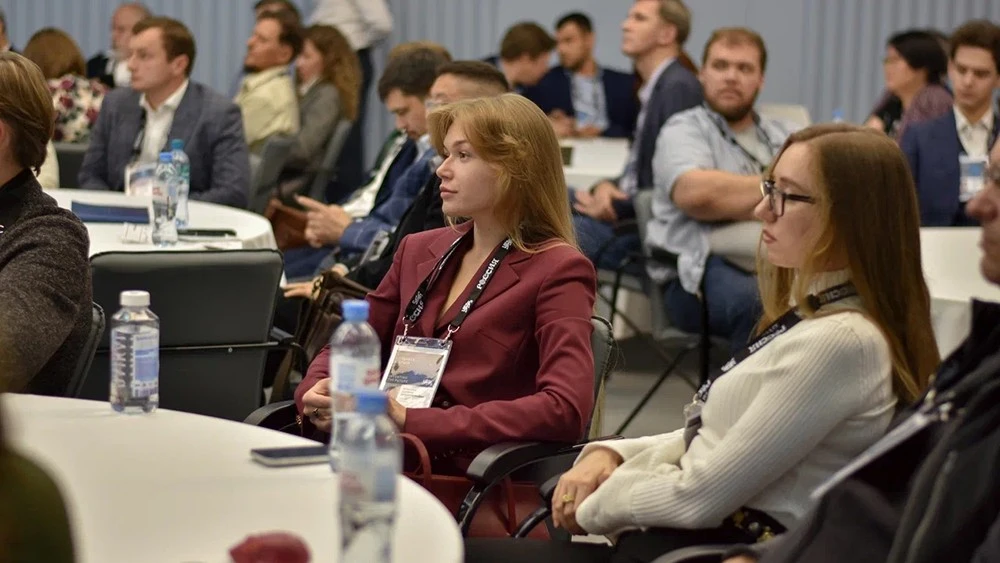
The II International Symposium "Inventing the Future" is being held on 7 – 8 October at the National Centre RUSSIA, bringing together participants from more than 85 countries and all regions of the Russian Federation. Over 260 Russian and international experts from China, the United States, Italy, Latin America, Southeast Asia, the Middle East, and Africa are taking part.
The International Symposium "Inventing the Future" is organised at the instruction of the President of the Russian Federation, Vladimir Putin, under the aegis of the Decade of Science and Technology in Russia, with the support of the Ministry of Foreign Affairs of the Russian Federation, the Ministry of Science and Higher Education of the Russian Federation, and the Ministry of Culture of the Russian Federation. The analytical partner of the Symposium is the VCIOM Analytical Centre, and the literary partner is the Eksmo-AST Publishing Group.