


Leading scientists presented social forecasts on the development of society and the world at the National Centre RUSSIA
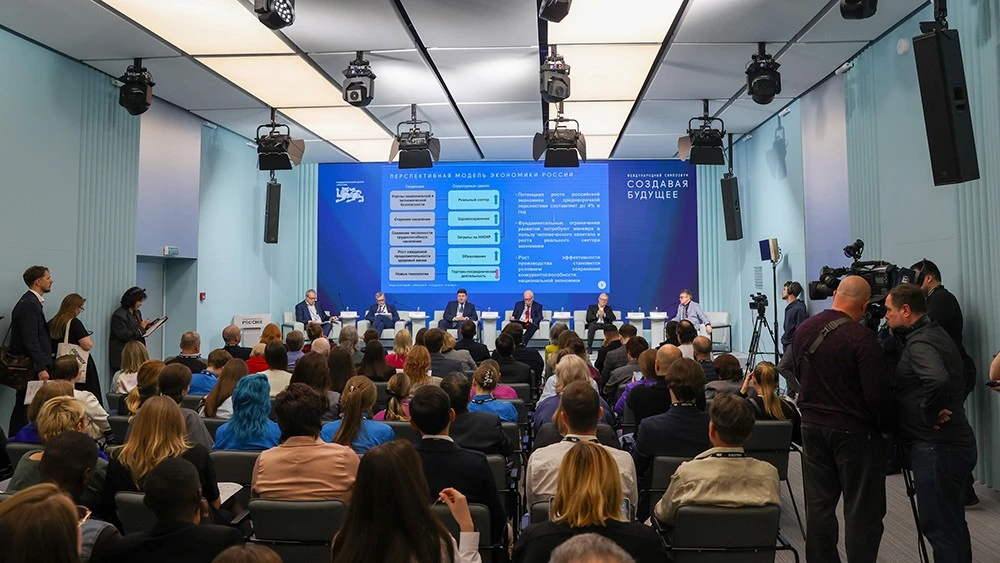
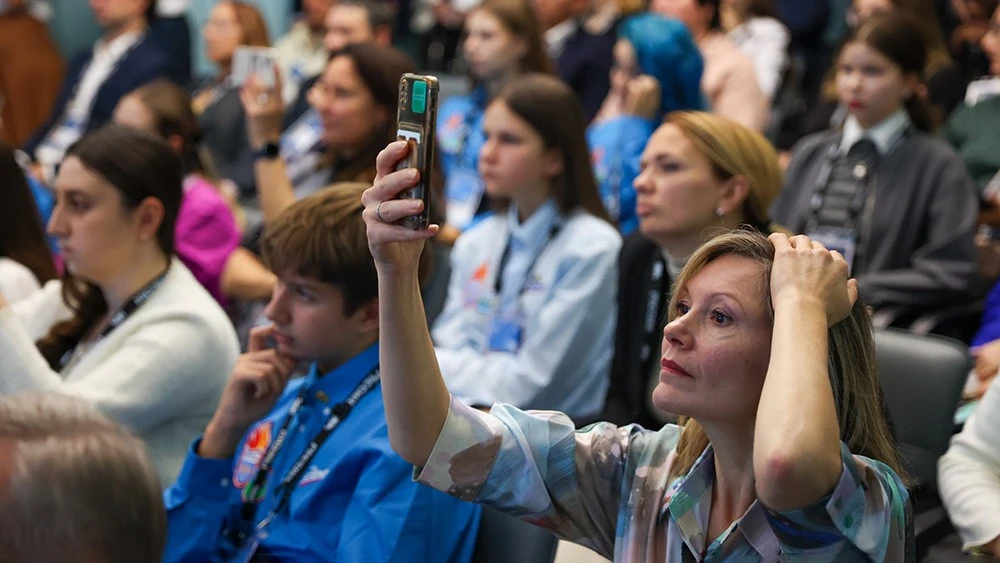
On 7 October, the II International Symposium "Inventing the Future" began its work at the National Centre RUSSIA. The expert programme was opened by a panel discussion "Social forecasting: Trends and Challenges", in which leading Russian scientists took part. They exchanged views on the possibility of predicting certain changes in conditions of instability, and discussed methods for forming positive scenarios for the country's future. The Symposium is being held under the auspices of the Decade of Science and Technology, with the support of the Ministry of Foreign Affairs, the Ministry of Science and Higher Education, and the Ministry of Culture of the Russian Federation.
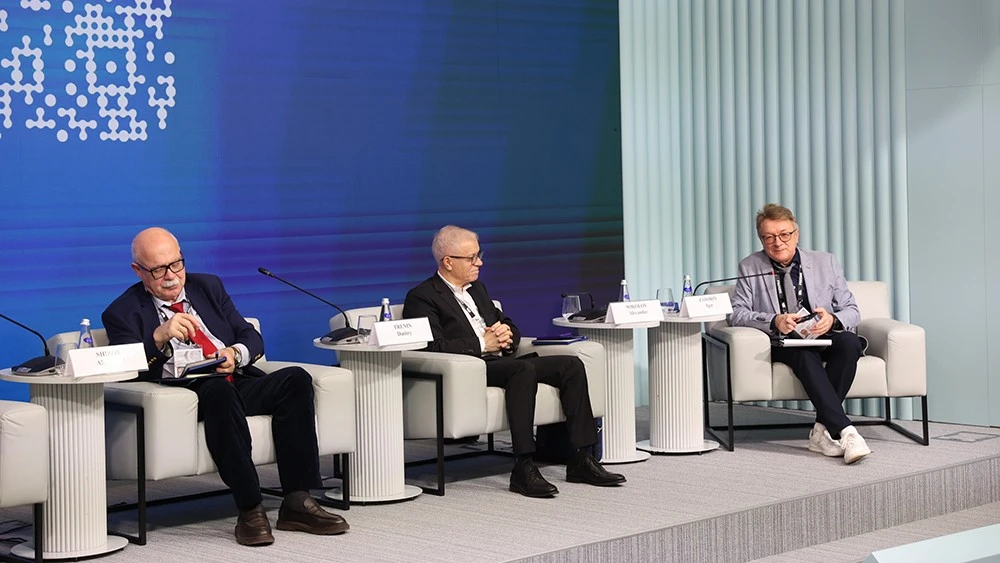
During the discussion, the panelists highlighted the main directions that determine the development of the society of the future. Alexander Sokolov, Deputy Director of the Institute for Statistical Research and Economics of Knowledge at the National Research University Higher School of Economics, Director of the Foresight Centre at the National Research University Higher School of Economics, and Head of the UNESCO Department for Future Studies, spoke about key technological trends. Safety technologies, primarily information technology, technologies in the field of health care, such as nanotechnology, anti-aging technologies, functional and personalized nutrition technologies, and much more, are of exceptional importance to society. Automation, robotics, and digital education technologies are changing the labor market, and the "smart city", a wide range of green and transport technologies are changing the quality of the urban environment.
According to Dmitry Trenin, Director of the Institute of World Military Economics and Strategy (Faculty of World Economics and Politics), leading researcher at IMEMO RAS, Candidate of Historical Sciences, the main thing in the future is not technologies, but the human spirit that creates these technologies and moves society. According to his forecasts, over several decades, there will be a struggle for order in a multipolar world, and Russia will need a strategic ideological rebalancing.
"We need to be guided by our values, our experience, and our own aspirations. Instead of Western centrism, we need Rossocentrism. We have named Russia an original civilization, and now this name needs to prove itself. It means to have our own worldview, philosophy, it's a world that is fertilized by our spirit and passed through our experience," said Dmitry Trenin.
Irina Kalabikhina, Doctor of Economics, Professor, Head of the Population Department at the Lomonosov Moscow State University's Faculty of Economics, Editor-in-Chief of the scientific journal "Population and Economics", spoke about five demographic revolutions to happen in the global context over the next 100 years. The first revolution is a demographic transition, in a course of which the birth rate decreases and life expectancy increases. This has led to an incredible increase in the population, but this process is halting. According to the scientist's forecasts, the world's population will begin to decline before reaching 10 billion.
"Experts underestimated the rate at which the birth rate is falling all over the world today, even in traditional countries. What's going to happen? My estimate is that by the middle of the 21st century, around the 60's, the world population will stop procreating, and then begin to decline. The world will simply change before our eyes, everything will change — the economy, relations between countries, perhaps world politics, too," Irina Kalabikhina explained.
The global trends include: the aging of the population, which contributes to increasing the burden on the working-age population; an increase in the proportion of people living alone, and a decrease in the average household size; uneven development and the growth of megacities.
"In the next couple of decades, there will be a serious shortage of labor in one part of the world, and an excess of labor in the other. But this surplus situation will be depleted very quickly," Irina Kalabikhina believes.
Economic forecasts are also made based on demographic data. Alexander Shirov, Director of the Institute of National Economic Forecasting of the Russian Academy of Sciences, Corresponding Member of the Russian Academy of Sciences, estimates the growth potential of the Russian economy until 2035 at 4%. At the same time, an increase in the share of the healthcare sector in the structure of the economy will be required due to demographic shifts, and a decrease in the number of able-bodied people will require an increase in labor productivity, which means an increase in research costs from both the state and business.
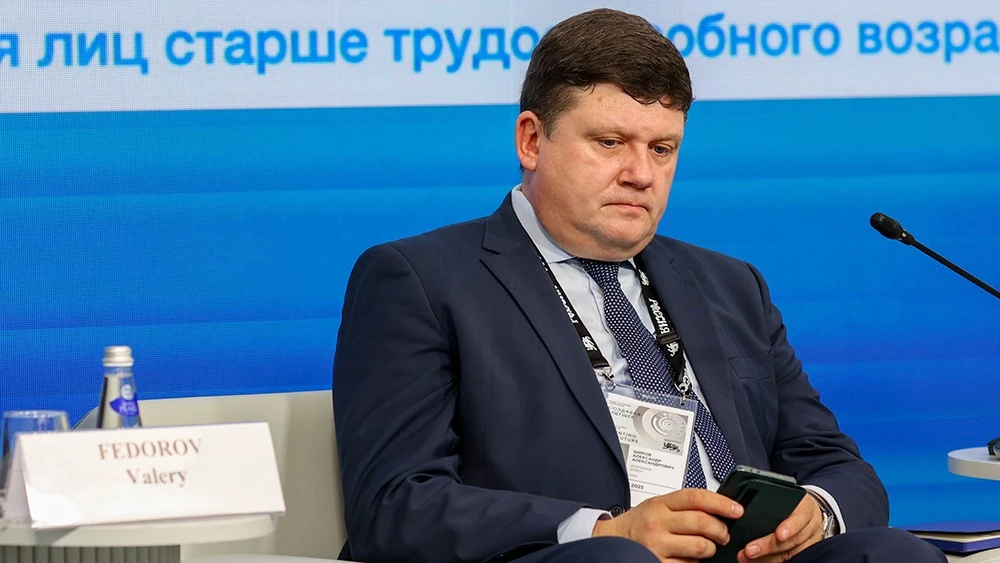
Valery Fedorov, Director General of the VTSIOM Analytical Centre, spoke about trends in values, identity, and social psychology. He divided the trends into mature — established, developing, gaining strength (which we are facing right now), and emerging — just appearing.
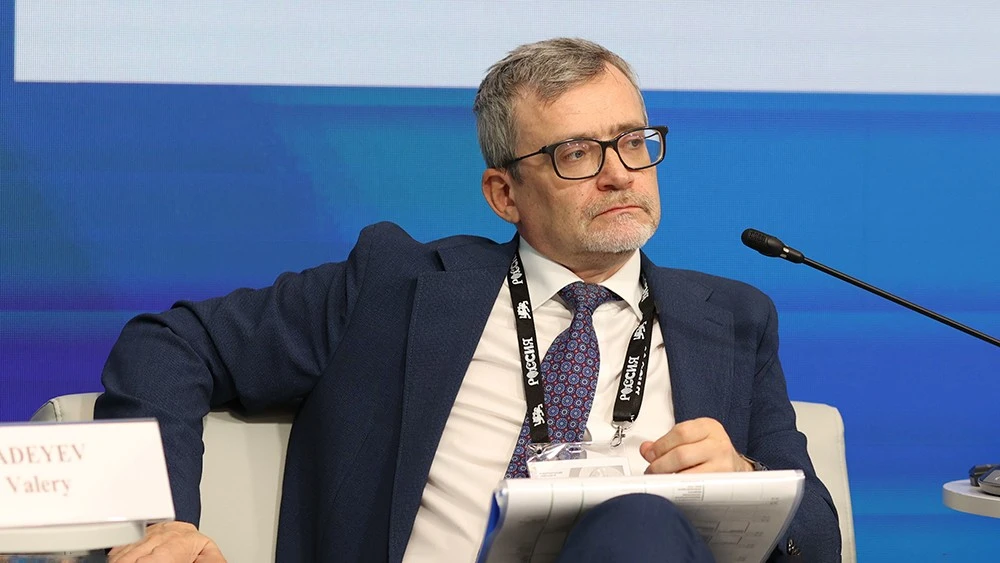
"Positive or negative scenarios await us — it depends on the assessment. What seems positive to us today may turn out to be a path leading to death on the next step. But the opposite is also possible — humanity has faced this many times," said Valery Fedorov.
Among the developing trends of values are the demand for traditional values, the failure of gender ideology and the search for a new unifying ideology. Developing identity trends: the growth of intergenerational solidarity, the departure of ageism, the suppressed conflict with the cosmopolitan identity of the urban generations of the "open world" — the "older" youth and the middle aged people. "Selfhelp" is a conscious attitude to one's mental health, taking care of oneself.
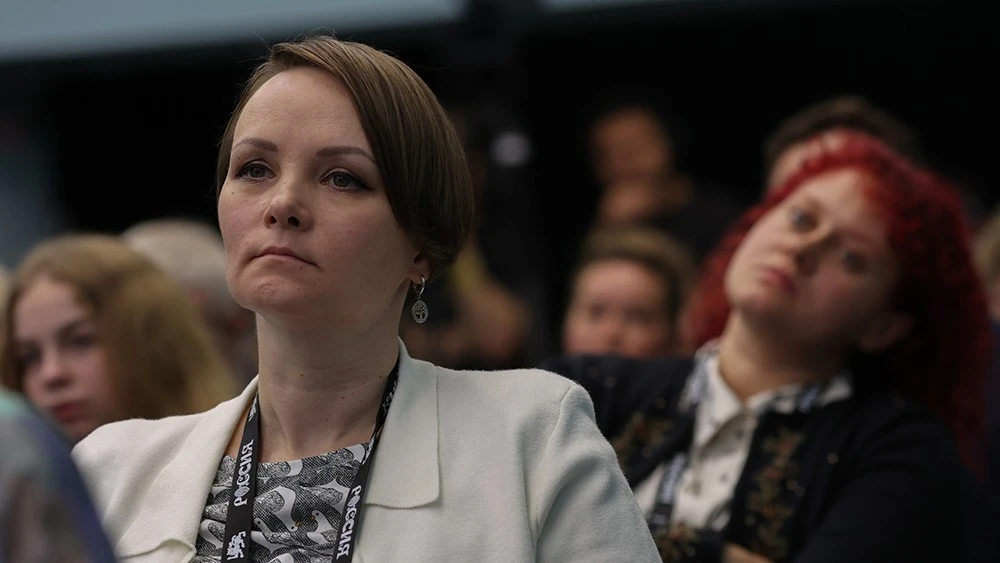
At the end of the discussion, Valery Fadeyev, Adviser to the President of the Russian Federation, delivered a speech.
"Who should be in the centre of a strong Russian state? A warrior who protects our country, and a teacher who teaches children, youth, and nurtures the spirit of the nation. It is from a warrior and a teacher that the future strong Russian state is being formed," Valery Fadeev emphasized.
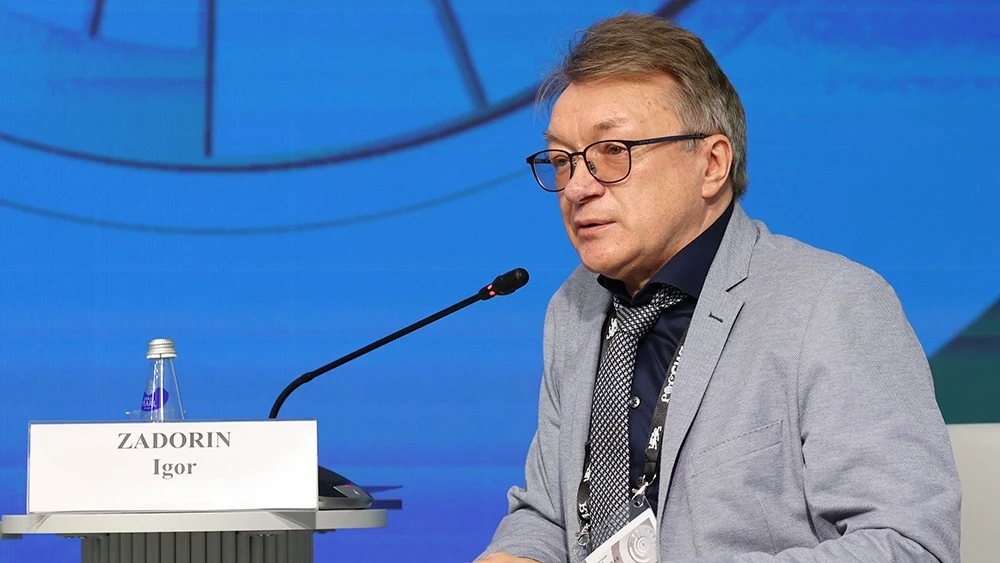
The panel discussion "Social Forecasting: Trends and Challenges" took place as part of the track "Society" of the Symposium's expert programme. The moderator was Igor Zadorin, organizer and head of the ZIRCON Research Group. The event was co-organized by the ZIRCON Research Group.
The II International Symposium "Inventing the Future" is being held on 7 – 8 October at the National Centre RUSSIA, and has brought together participants from more than 85 countries and all subjects of the Russian Federation. It is attended by more than 260 Russian and foreign experts from China, the USA, Italy, Latin America, Southeast Asia, the Middle East and Africa.
The International Symposium "Inventing the Future" is organized on behalf of Russian President Vladimir Putin under the auspices of the Decade of Science and Technology, and with the support of the Ministry of Foreign Affairs, the Ministry of Science and Higher Education, and the Ministry of Culture of the Russian Federation. The analytical partner is the VTsIOM Analytical Centre. The literary partner is Eksmo-AST Publishing Group.